Anlässlich unserer regionalen Initiativen im Rahmen des 70jährigen Jubiläums des IDM reiste unser Geschäftsführer Sebastian Schäffer Ende April nach Kyjiw. Dort wurde er unter anderem Zeuge von Luftangriffen. Seine Erlebnisse während der Reise hat er in einer interaktiven Story Map zusammengefasst:
Vollbild
Volltext:
Ich scanne mit meinem Mobiltelefon den QR-Code auf dem Tisch in einer Mikrobrauerei am Andreassteig in Kyjiw, um einen Blick in die Speisekarte zu werfen. Plötzlich schrillt eine Sirene und ein Banner erscheint auf meinem Display : „Air alert! There is air alert in Kyiv. Proceed to shelter!”
„War das echt?“, fragt mich die Person, die mir gegenüber sitzt. Es ist nicht der erste Alarm an diesem Tag und ganz generell hat sich auch eine gewisse Indifferenz bei ihr eingestellt. „Ja“, antworte ich und spüre dabei, wie mein Herzschlag deutlich an Frequenz zunimmt. „Ah jetzt sehe ich es auch.“ Sie hat die App seit ein paar Wochen stummgeschaltet. Das ständige Suchen nach jeder noch so kleinen Information nach den unzähligen Luftalarmen im Herbst und Winter haben einen hohen Zoll für die mentale Gesundheit gefordert. „Was machen wir?“, schaut sie mich erst fragend an und lässt dann den Blick durch den Raum schwenken. Meiner folgt ihrem. Keine Aufregung, eher genervte Augen die auf Telefone blicken. Auch hinter der Fensterscheibe auf dem Kopfsteinpflaster ist keine gesteigerte Hektik zu erkennen. „Bier bestellen?“ – „Ok.“
Kraków Główny
Drei Tage früher fast genau zur gleichen Zeit steige ich in Krakau in einen Zug Richtung Przemyśl. Von der polnischen Grenzstadt, die inzwischen wahrscheinlich bekannter ist als es ihr lieb ist, geht es dann weiter nach Kyjiw. Insgesamt 14,5 Stunden für knapp 860 km, das ging auch schon vor 100 Jahren schneller. Dabei spare ich mir eh einen Teil der Gesamtdistanz von Wien, weil ich bereits zwei Tage an einer Konferenz in Krakau teilgenommen habe. Der Reisetag ist dadurch aber auch extrem lang. Mein 70-Liter Rucksack wird mir in kürzester Zeit schwer auf den Schultern. Ich habe ein Versprechen gegeben, die abgelaufenen Mitbringsel aus dem letzten Jahr zu ersetzen und endlich zu meinem Freund in die ukrainische Hauptstadt zu bringen. Ursprünglich wäre ich am 21. Februar 2022 zu ihm geflogen, habe mich dann aber nicht getraut. Natürlich muss ich das jetzt überkompensieren und habe damit fast Übergepäck. Es würde aber auch niemanden stören, ein Vorteil im Vergleich zum Flug.
Przemyśl
Es nieselt, als ich aus dem leicht verspäteten Intercity der polnischen Eisenbahnlinien PKP steige. Es ist dunkel und auf den ersten Blick nicht zu erkennen, in welcher Richtung sich der Ausgang befindet. Ich folge einfach den vielen scheinbar routinierten Leuten, die sich zielstrebig nach links bewegen. In der Bahnhofshalle dann Helfer*innen mit gelben Westen und Personen in Tarnfarben mit polnischer Fahne am Ärmel. Ich bin unsicher, was ich tun muss, komme aber mit meiner Frage auf Englisch nicht sehr weit. Die von mir angesprochene Gelbwestenträgerin fragt daher auf Polnisch in die Runde, ob hier nicht jemand Englisch spricht. Eine ukrainische Teenagerin, die mit ihrer Mutter reist, bietet sich sofort an. Dank ihrer Hilfsbereitschaft sowie meines bruchstückhaften Ukrainisch weiß ich nun, dass ich nur mit Fahrkarte in die Ukraine den Warteraum links betreten darf und ich mich 40 Minuten vor Abfahrt hinten bei einem abgetrennten Bahnsteig einfinden soll. Bevor ich mir einen Stempel hole, der ermöglicht, nicht jedes Mal die Fahrkarte vorweisen zu müssen, wenn man sich zu den anderen wartenden Personen setzen möchte, will ich sehen, ob ich noch etwas zu essen finde.
In dem direkt am Bahnhofsvorplatz gelegenen Imbiss mit einheimischen Spezialitäten lässt sich trotz Türklingel, die automatisch bei meinem Betreten ausgelöst wird, niemand blicken. Ich verstehe den Hinweis und suche nach Alternativen. Inzwischen regnet es richtig und ich trage meine Überkompensation auf den Schultern. Zumindest Wasser sollte ich mir organisieren. Zum Glück trage ich Funktionskleidung und ziehe mir die Kapuze über den Kopf. Vorbei an dem Hotel, in dem ich bei der Rückfahrt übernachten werde, ein wenig bergauf zu einer Kreuzung, wo der Deutsche in mir trotz des kaum vorhandenen Verkehrs an der roten Ampel Halt macht. Ein polnischer Kiosk namens Żabka, an dem man auch noch spätabends Grundnahrungsmittel bekommt, befindet sich auf der anderen Straßenseite. Ich erkenne, dass meine Sitznachbarin aus dem Intercity an der Apotheke um die Ecke abbiegt. Sie hatte abgepackte Nüsse dabei und wirkte allgemein wesentlich besser vorbereitet als ich, weshalb ich davon ausgehe, dass sie nicht so ziellos umherläuft wie ich. Tatsächlich sind in der Straße ein paar Restaurants. Ich entscheide mich für die Pizzeria. Keine gute Wahl. Es ist schließlich schon fast halb zehn, die Küche ist schon kalt, schließlich schließt man um 22:00 Uhr. Auf die Frage, ob ich noch etwas zu trinken bekommen kann, dreht sich die Kellnerin kurz zur Bar und verneint anschließend. Geschickt weicht sie auch aus als ich frage, ob ich zumindest die Toilette benutzen dürfte. Sie deutet nach draußen und sagt mir dann nach links. Ihr Daumen zeigt dabei auf das WC-Schild hinter ihr. Mamma Mia. Die Ironie lässt mich schmunzeln und ich schultere wieder meinen Rucksack. Wie schon an so vielen Abenden zuvor rettet schließlich der Dönerladen meine Gesamtsituation.
Zurück in der Bahnhofshalle sitze ich auf einem der zusätzlich aufgestellten Sessel und versuche die Geschichten hinter den müden Gesichtern zu erraten. Viele Mütter mit Kleinkindern bis Teenager, einige ältere Menschen, kein einziger erwachsener Mann im wehrpflichtigen Alter. Außer mir. Gegen 22:50 Uhr gehen Mutter und Tochter, die mir bei der Ankunft Auskunft gegeben haben, an mir vorbei und lächeln mich an. Ich lächle zurück und mache mich ebenfalls auf den Weg. Wir stehen gemeinsam in der Schlage, die sich von einem Gebäude ins nächste schlängelt. Daneben ein Zelt der Caritas. Der Regen ist wieder zu einem Nieseln geworden. Ich mag mir gar nicht vorstellen, wie es hier im Winter gewesen sein muss. Wir wechseln kein Wort, was insbesondere meinen Kopfhörern geschuldet ist, tauschen aber hin und wieder Blicke und Gesten aus. Ich passe auf den Rollkoffer auf, als beide kurz verschwinden. Die Größe ist im Vergleich zu meinem Rucksack geradezu lächerlich klein, was entweder eine gewisse Regelmäßigkeit der Reise vermuten lässt, oder einen Kurztrip. Die Routine im Ablauf sowie die vergleichsweise gute Laune lässt mich zu Ersterem tendieren.
Um 23:40 Uhr bin ich endlich im Zug. Zehn Minuten vorher war die geplante Abfahrt und ich stand noch in der Halle mit den Grenzkontrollhäuschen. Draußen fuhr ein Zug der ukrainischen Bahn vorbei und mein Herzschlag setzte kurz aus. Dann erinnerte ich mich an einen anderen Reisebericht, in dem stand, dass der Zug erst losfährt, wenn alle durch die Kontrolle gegangen sind. Im Vergleich zu meinen sonstigen Reisevorbereitungen habe ich mich durchaus ausführlicher mit dem Ablauf beschäftigt. Trotzdem wollte ich auch irgendwie nicht zu viel darüber nachdenken. Möglicherweise aus Angst vor der eigenen Courage. Je näher die Reise kam und ich mit Personen über meinen Plan nach Kyjiw zu fahren sprach – unabhängig davon, ob sie das schon selbst gemacht hatten oder nicht – desto nervöser wurde ich. Meine Frau findet ganz grundsätzlich, dass es eine dumme Idee war, kennt mich aber lange genug, um zu wissen, dass mich fast nichts abhalten kann, wenn ich mir etwas richtig in den Kopf gesetzt habe. Und erst recht nicht, wenn ich das in einem publizierten Buch aufgeschrieben habe.
Als ich in meinem Wagon ankomme, ist mein Platz besetzt. Drei Generationen einer Familie. Statt am Fenster sitze ich jetzt eben am Gang, und statt neben der Mutter nun neben der Tochter, damit die Großmutter sitzen bleiben kann. Wir tauschen uns kurz aus und ich biete ihr die Nüsse an, die ich inzwischen besorgt hatte. Sie lehnt ab und holt ihr Handy hervor. Genervt blickt sie auf die Uhrzeit und mir ist das natürlich sofort sympathisch. Zwei Minuten vor Mitternacht setzen wir uns in Bewegung, 28 Minuten Verspätung schon zu Beginn. Als ehemaliger Bahn.Bonus-Status-Besitzer weiß ich, was das in Deutschland bedeuten würde. Bei der Abfahrt macht meine Sitznachbarin tatsächlich die Becker-Faust und ich muss mich sehr zusammenreißen nicht laut loszulachen.
Lwiw
Um genau 0:25 Uhr überqueren wir die Grenze und ich bin zum ersten Mal seit Oktober 2019 wieder in der Ukraine. Knapp eine Stunde später erreichen wir Lwiw. Es ist 02:30. So viele schöne Erinnerungen an diese Stadt kommen zurück. Wie es jetzt wohl sein mag? Ob es all die unterschiedlichen Themenrestaurants noch gibt? Die Kaffeemine. Die Brauerei, die das Bier „Frau Ribbentrop“ herausgebracht hat. Die betrunkene Kirsche. Ich hatte überlegt, einen Stopp auf der Reise einzulegen. Aber das Programm war eh schon voll, ich muss das einfach zu einer anderen Gelegenheit herausfinden. Eine andere Geschichte zur Stadt erzählte mir der Vater meines Freundes, für dessen Geburtstag ich auch nach Kyjiw reise. Im Zuge der vollständigen Invasion durch die Russische Föderation fuhren sie im März 2022 nach Westen, um sich in Sicherheit zu bringen. Nachbar*innen aus Kyjiw informierten ihn, dass die Druckwelle einer Raketenexplosion die Fenster in seiner Wohnung zwar nicht bersten hat lassen, diese aber aufgedrückt hätte. Leider waren seine direkten Nachbar*innen, die seinen Schlüssel hatten, ebenfalls geflohen. Also ließ er ihn in Lwiw nachmachen und schickte ihn mit der Nova Pošta in die Hauptstadt. Einen Tag später konnten die Fenster geschlossen werden. Insgesamt schauen die Leute nun viel mehr aufeinander, auch wenn man vorher kaum etwas miteinander zu tun hatte, schließt er seine Geschichte.
Wesentlich weniger interessant ist dann meine Weiterfahrt. Einfach weil es dunkel ist. Normalerweise schlafe ich sehr schlecht in sich bewegenden Objekten. Meistens nur dieser Sekundenschlaf, nach dem man noch geräderter aufwacht. Dieses Mal geht es aber erstaunlich gut. Zumindest immer wieder am Stück. Zugegeben: Ich habe ein Erste-Klasse-Ticket gebucht, man hat großen Abstand zwischen den Sitzen und nicht jede Bewegung der Mitreisenden weckt einen auf. Es geht auch ohne Reservierung des Nebenplatzes, zu der man mir geraten hatte, um sich ein wenig ausstrecken zu können. Es gibt genug Platz für die Füße im IC+ und sich quer über die Sitze legen würde aufgrund der Abstände auch nicht wirklich gut funktionieren. Wer wirklich liegen möchte, sollte lieber gleich die Verbindung mit Schlafwagen nutzen. Wer oft aufstehen muss, sollte lieber den Gangplatz wählen, die linken Sitze in der Buchungsmaske stehen (meist) in Fahrtrichtung nach Kyjiw, rechts dann bei der Rückfahrt. Die Buchung fand ich sehr einfach, gerade im Vergleich zur polnischen PKP. Leider kann ich die App der Bahngesellschaft Ukrzaliznycja nicht nutzen, weil dafür eine ukrainische Mobilnummer notwendig ist. 20 Tage vor Abfahrt kann man die Tickets buchen. Inzwischen sogar eine Direktverbindung von Wien, die nach knapp 24 Stunden über Budapest und Lwiw nach Kyjiw fährt.
Kyjiw
Zwei Minuten vor der geplanten Ankunft um 10:06 Uhr halten wir in Kyjiw-Pasažyrskyj. Ich bin zwar müde, aber sehr glücklich meinen Freund am Ende der Treppe zu sehen. Weder auf der Fahrt noch jetzt, da ich angekommen bin, stellt sich ein Gefühl der Angst ein. Ich war unsicher geworden. Insbesondere nach einem Gespräch, in dem mir illustriert wurde, dass zwar bisher noch keine Züge getroffen wurden, aber es ja durchaus passieren kann, gerade wenn man über eine Brücke fährt, zum Beispiel. Außerdem wären ja Waffentransporte ein militärisches Ziel und die erfolgen auch mit Zügen. Aha. Na Danke für diesen Gedanken. Als ob Putin zwischen zivil und militärisch unterscheiden würde. Auf jeden Fall ist es, wie eine ukrainische Kollegin mir in einem Gespräch mitgeteilt hatte. Manchmal sieht es von der Ferne gefährlicher aus, als wenn man nahe dran ist.
Irpin
Das gilt allerdings nicht für tatsächliche geschehene Grausamkeiten. Nach einer Dusche und nachdem mein Freund und ich versuchen, uns die vergangenen dreieinhalb Jahre, in denen wir uns nicht persönlich gesehen haben, zusammenzufassen, fahren wir auf seinen Vorschlag nach Irpin. Er erzählt mir, dass es schon wesentlich mehr wiederaufgebaut ist als seit seinem letzten Besuch. Dennoch ist es bedrückend und mit Worten nur schwer zu beschreiben.
Kyjiw
Reinfeiern in den Geburtstag meines Freundes in einer Bar geht aufgrund der Sperrstunde um 24:00 Uhr nicht. Neben den Bildern aus Irpin auch immer eine Erinnerung an die Tatsache, dass man sich in einem Land im Kriegszustand befindet. Sonst könnte man es auch leicht vergessen. Das Restaurant, in dem wir Abendessen, ist bis auf den letzten Platz gefüllt. Die Karte wird auch hier über den QR-Code abgerufen. Und darüber kann man auch bezahlen. Dabei hatte ich mich so gut vorbereitet auf Ukrainisch um die Rechnung zu bitten. Am nächsten Tag gehen wir dann für das geplante Geburtstagsbarbecue einkaufen. Im Baumarkt besorgen wir Kohle, gleich am Eingang sind unterschiedliche Modelle von Generatoren erhältlich. Alle reduziert. Ich werte das als gutes Zeichen. Tatsächlich gab es seit Anfang März keine Raketenangriffe mehr, Stromausfälle selten und die Unterteilung des Tages in Einheiten mit Elektrizität und ohne ist nur noch eine Geschichte, die mir ein Kollege am nächsten Tag nach unserer gemeinsamen Veranstaltung erzählt.
Der Abend wird ganz wunderbar. Es gibt viel zu Essen, das wir auf dem Markt besorgt haben. Bier, Wein, Whiskey. Musik, Gesang und lustige wie traurige Geschichten. Rechtzeitig vor der Sperrstunde wird das neue Album von The National veröffentlicht, sodass wir es noch in der Runde hören können. Leider müssen die letzten Gäste aber dann gegen 23:30 Uhr gehen. Und da ist sie wieder die Erinnerung. Kriegszustand. Und nur, damit wir es nicht vergessen, gibt es um 04:01 Uhr Luftalarm.
Letztendlich ist es genauso unspektakulär wie dieser Satz. Meine App löst nicht aus, weil mein Telefon im Schlafmodus ist. Ich bin offensichtlich wirklich nicht gut vorbereitet. Mein Freund weckt mich leise und flüstert fast: „Du könntest ein paar Explosionen hören.“ Er hat es kaum ausgesprochen, schon gibt es unnatürliche Geräusche und einen Knall. „Müssen wir etwas tun?“, frage ich nicht nur schlaftrunken. „Ich denke nicht.“ IRIS-T SLM, oder ein anderes Luftverteidigungssystem, regelt das tatsächlich. Gegen 6:25 Uhr gibt es Entwarnung. Leider ist es nicht für alle so glimpflich ausgegangen. In Uman trifft eine Rakete ein Wohnhaus. Tote und Verletzte. Freund*innen, Kolleg*innen und meine Familie schreiben mir. Es schafft es also auch in internationale Medien. Im Nachhinein Berichte darüber zu lesen trifft mich nochmal anders. Die Direktorin des Instituts, mit der ich das Event später um 11:00 Uhr organisiere, entschuldigt sich, dass ich das erleben musste. Ich antworte, dass es für mich einmal so war, für sie aber seit 14 Monaten so ist. Dennoch muss ich in meinen Eröffnungsworten natürlich darauf Bezug nehmen. Unser Thema dreht sich letztendlich auch um Sicherheit.
Während der Fahrt von Teremky, der Endstation der blauen Metrolinie, in deren Nähe ich übernachte, nach Majdan Nezaležnosti Matt Berningers Stimme auf den Ohren zu haben verursacht Gänsehaut. Ganz echte, sichtbare und nicht nur eine Phrase, die ich sonst über ein für mich besonderes Lied oder Album auf Sozialen Medien posten würde. Ich werde abgeholt. Also von einem Kollegen, nicht nur von den Liedern. Es ist nicht so einfach sich im Labyrinth der Station zu finden. Außerdem hat sie erst kürzlich wieder geöffnet. Die verzweigten Tunnel ermöglichen einen direkten Zugang zum Präsidentenpalast. Wir gehen nicht wie bei meinem letzten Besuch am Michaelsplatz die ebenfalls nach Michael benannte Straße hinauf, sondern parallel dazu zum Institut für Philosophie der ukrainischen Akademie der Wissenschaften, in dessen Gebäude sich die Büros unserer Kooperationspartner*innen befinden.
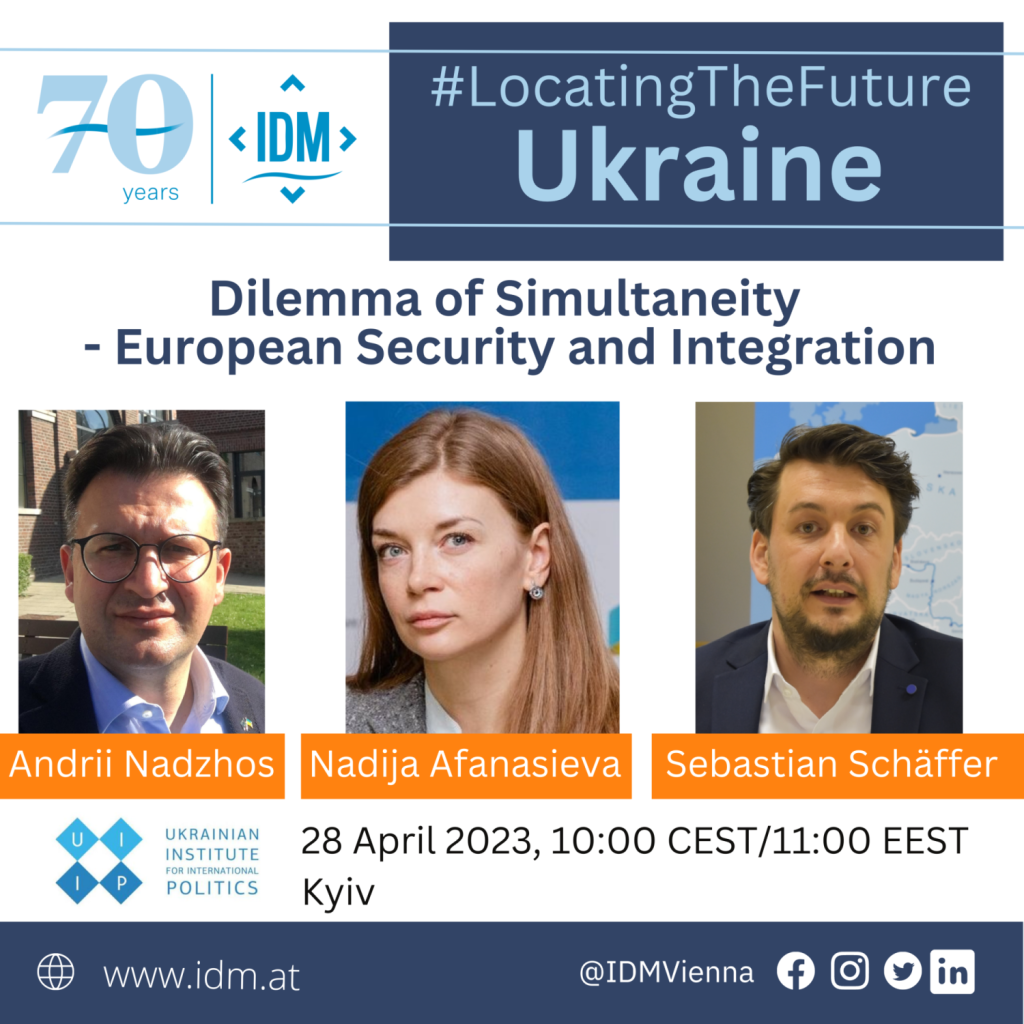
Im Gebäude grüßt der Portier jovial. Im vierten Stock ist es dann ernster, dort befinden sich Polizei und Militär auf einem Kontrollgang. Aus dem Fenster hat man eine ideale Schusslinie auf das St. Michaelskloster. Die slowakische Präsidentin und der tschechische Präsident sind in der Stadt. Unser Event ist natürlich von den aktuellen Ereignissen geprägt, es ergibt sich aber eine, wie ich finde, sehr spannende Diskussion, die sehr offen und ehrlich geführt wird. Zudem beteiligen sich auch die Teilnehmer*innen im Webinar mit interessanten Fragen. Es gerät fast in den Hintergrund, dass es sich auch um eine Veranstaltung im Rahmen unserer 70-Jahre-IDM Aktivitäten handelt, was ja einer der Hauptgründe für meine Reise ist.
Anschließend gehe ich mit den beiden Mitarbeiter*innen des Ukrainian Institute for International Politics (UIIP) auf einen Spaziergang durch das Viertel. Entlang an der „Memory Wall“, an der die gefallenen Soldat*innen seit 2014 mit Bildern verewigt werden. Die Wand musste bereits zweimal erweitert werden. Es hört und hört nicht auf. Ich merke wie sich ein Klos in meinem Hals bildet. Als ich auf das Geburtsdatum eines Soldaten schaue und 2001 lese muss ich hörbar einatmen. So jung, so tapfer, aber auch so unnötig. Wofür? Vor der Diplomatischen Akademie der Ukraine dann eine Ausstellung einiger russischer Panzer sowie beschossene Autos, ein Anblick, den ich schon aus Irpin kenne. Dahinter drei Sandsacktürme. Sie schützen das Denkmal der Fürstin Olga, an das ich keine Erinnerung von meinem letzten Besuch habe. Ich war mir sicher, die Demonstration, die ich im April 2019 dort aus dem Fenster beobachtet hatte, fand auf einem leeren Platz statt.
Wir machen einen Halbkreis zurück in Richtung St. Michaelskloster. An mehreren aufgestellten Wänden sind Bilder aus Warschau 1944 und daneben aus Mariupol 2022 aufgereiht, die ähnliche Motive zeigen. Zerbombte Häuser, brennende Gebäude, Leichensäcke, erschossene Personen. Die Konstruktion schwankt gefährlich im Wind, vielleicht sind es aber auch meine Knie, die nach diesem visuellen Schlag in die Magengrube drohen nachzugeben. Wir setzen unseren Spaziergang fort, auch wenn mir das Wort unpassend erscheint.
Ich versuche von meinen beiden Begleiter*innen herauszufinden, wie sie die letzten Monate erlebt haben und wie sie mit der Situation umgehen. Wir erreichen die Brücke, die den Wolodymyr-Hügel und Chreschtschatyi Park verbindet. Diese wird im Volksmund auch Klitschko-Glas-Brücke genannt, weil die beiden ehemaligen Boxer-Brüder zur Eröffnung auf dem Plexiglas herumgesprungen sind, um die Stabilität der Struktur zu bestätigen. Mein Begleiter wartet nur darauf, dass ich auch darauf trete, um mir dann zu erzählen, dass die Brücke von einer Rakete beschädigt wurde. Während aus meinem Gesicht die Farbe weicht, muss er herzlich lachen. Natürlich hat man die Schäden umgehend beseitigt, was er mir allerdings erst nach einer kurzen dramaturgischen Pause sagt. Resilienz und Innovation. Ersteres bewiesen durch den Umgang mit den Grausamkeiten des Krieges, von Letzterem werde ich unmittelbar danach ebenfalls Zeuge. Eine Frau macht ein Foto von uns, geht zu ihrem Laptop, druckt eine Zeitungstitelseite aus und gibt sie uns. Die Bezahlung erfolgt mit einer App, in der man den Code der Dame eingibt. Das Ganze dauert keine fünf Minuten und wir haben nicht nur für einen guten Zweck gespendet, sondern auch eine Erinnerung an unseren Ausflug.
Durch den Freiheitsbogen des ukrainischen Volkes gehen wir zurück zum Majdan, auf dem die Tulpen blühen. Dieses Mal geht es die Michaelstraße hinauf, vorbei am Außenministerium zu dem Restaurant, in dem der Gewinner von Master Chef Ukraine kocht. Ich esse den wahrscheinlich besten Borschtsch meines Lebens, kann ihn nur nicht bezahlen, weil meine Bank mir wahrscheinlich nicht glaubt, dass ich mit meiner Karte in der Ukraine bin. Dankenswerterweise springt eine Kollegin ein und wir machen uns den Andreassteig entlang auf die Suche nach einer Möglichkeit Geld zu wechseln, damit ich meine Schulden begleichen kann. Wir kommen am Mykola-Hohol-Denkmal vorbei, das ebenfalls mit Sandsäcken umgeben ist, nur sein Kopf schaut heraus. Warum dieser nicht geschützt wird, erschließt sich mir nicht. Wir werden schließlich an dem Platz fündig, auf dem ich vor ein paar Jahren das zweifelhafte Vergnügen hatte in das Zibertfest zu platzen. Ein Bierfest, das so tut als würde es im September in München stattfinden, dann aber die Maßkrüge aus Zwei-Liter-Plastikflaschen füllt. Jetzt steht dort ein Riesenrad. Vielleicht war es auch damals schon da. Ein fotografisches Gedächtnis habe ich schon mal nicht.
Ich bin im Anschluss mit zwei Ukrainerinnen verabredet, die im April 2022 kurzzeitig bei mir wohnten, während sie auf ihr Visum für das Vereinigte Königreich warteten. Sie sind schon länger wieder zurück in Kyjiw. Wir wollen uns in einem Café treffen. Als ich durch die Eingangstüre gehe, habe ich kurz das Gefühl durch ein Portal direkt in ein hippe Kaffeemanufaktur im Berliner Prenzlauer Berg zu treten. Es ist kein Platz frei, wir haben nicht reserviert. Ich schaue mich um, vielleicht sind sie ja schon da. Ich erblicke ein bekanntes Gesicht, mein Gehirn braucht etwas länger, um den Netzhautreiz zu verarbeiten. Ich winke schon fast, als ich realisiere, dass es sich nicht um eine meiner Bekannten handelt. Es ist meine Sitznachbarin aus dem Zug von Krakau. Bevor sie noch den Eindruck bekommt, dass ich sie stalke, mache ich auf dem Absatz kehrt und koordiniere einen neuen Treffpunkt. Es ist nicht einfach in der Umgebung etwas mit freien Plätzen zu finden, was ich generell wieder als gutes Zeichen werte. Wir sitzen aufgereiht an einer Bar, die viel zu viel Auswahl an Bier in viel zu kleinen Gläsern ausschenkt, und unterhalten uns. Eigentlich spricht hauptsächlich eine von uns. Vielleicht als Berufskrankheit, sie ist Lehrerin. Aber ich habe sie auch seit einem Jahr nicht mehr gesehen, während ihre Cousine dazwischen öfter in Wien war und dabei auch mich besucht hatte. Die Pädagogin muss noch ihren Unterricht vorbereiten, und verabschiedet sich. Ihre Cousine und ich beschließen weiterzuziehen. Sie kennt da eine Mikrobrauerei.
Und damit sind wir wieder am Anfang dieses Reiseberichts angekommen. Nach knapp einer Stunde gibt es Entwarnung. Ich bestelle noch ein Bier und Snacks dazu. Unsere Gespräche drehen sich um durchaus schwere Themen, doch der Krieg ist keines davon. Geht das überhaupt? Wahrscheinlich muss es sogar. Es ist wie bei so vielen Dingen, niemand will auf nur eine Sache reduziert werden. Und das Leben geht weiter. Auch wenn über dir die Luftverteidigung arbeitet. Wir fahren noch zwei Metro-Stationen gemeinsam, am Ploschtscha Lva Tolstoho verabschieden wir uns mit einer Umarmung und dem Versprechen, uns bald wieder zu sehen.
Gleiches Prozedere, nur mit anderen Personen am nächsten Tag am Bahnhof. Ein letzter Blick zum Abschied und Hände, die winken. Unvermeidlich der Gedanke, den man sonst nicht unbedingt bekommt. Es gibt dieses Video, in dem die einfache, aber eindrucksvolle Rechnung aufgemacht wird, wie oft man seine Eltern im Leben noch sehen wird. Gerade, wenn man weiter voneinander entfernt lebt, reduziert sich diese Zahl dramatisch. Meine Sicht verschwimmt. Regen prasselt an die Scheiben des anfahrenden Zugs. Wasserballonaugen.
Ich benötige mehr als die Hälfte der Fahrt nach Przemyśl bis ich auch nur ein Wort aufgeschrieben habe. Mir fällt kein Einstieg ein, ganz zu schweigen von einem Titel. Während an mir die Landschaft vorbeizieht, haben meine Gedanken wahrscheinlich zum ersten Mal seit Tagen die Möglichkeit einfach nur zu wandern. Und dann kommt es ganz plötzlich. Den Rest der Fahrt verbringe ich fast manisch damit das Erlebte niederzuschreiben. Ein Wettlauf. Kommt meine Geschichte oder der Zug zuerst über die Grenze? Wir erreichen erneut pünktlich unser Ziel. Auch mein Ringen mit den Worten ist in Przemyśl angekommen. Allerdings erst bei der Hinfahrt. Ich werde aber noch ausreichend Zeit bekommen, sie zu Ende zu schreiben, bevor ich zurück in Wien sein werde.
Welcome to Europejski / Dobry wieczór, my z Europy
Wir dürfen eine halbe Stunde lang nicht aussteigen. Das ist aber weniger schlimm als der 15-minütige Halt kurz nach der Grenze, weil ich mich da nicht mit dem polnischen Mobilfunknetz verbinden konnte und so komplett abgeschnitten von der Welt war, da meine mobilen Daten für das ukrainische Netz schon in Lwiw aufgebraucht waren. (Oder wie die zu diesem Zeitpunkt noch vor mir liegende Rückreise von Krakau nach Wien, die dank Flugausfall und fehlender Kooperation von Austrian Airlines, genauso lange gedauert hat wie die beiden Zugfahrten Przemyśl-Kyjiw und Kyjiw-Przemyśl, aber dieser Treppenwitz ist eine andere Geschichte…). Dann wieder anstehen in der Kontrollhäuschenhalle, nur jetzt von der anderen Seite. Da ich einer der wenigen mit EU-Pass in der Schlange bin, wird die mit dem EU-EWR-CH-Schild gekennzeichnete Kabine für alle geöffnet. Soll mir recht sein, ich habe es nicht eilig, weil ich die Nacht im Przemyśl verbringen werde und bereits einen ungefähren Eindruck habe, welche Art von Zimmern mich erwartet. Meinen Rucksack muss ich danach noch in einen Scanner schieben, nur sitzt am anderen Ende niemand, um das Röntgenbild anzusehen. Dann hätte ich das ganze Essen gar nicht aufessen müssen. Ein wenig wiederholen sich ja ständig Dinge auf dieser Reise.
Auf jeden Fall komme ich wieder durch die Bahnhofshalle und wer steht hinter dem Welcome-Desk? Die Gelbwestenträgerin von der Hinfahrt. Ich freue mich sehr, dass ich ausgerechnet ihr meine übrigen Hrywnja in die Hand drücken kann, aber sie deutet nur auf die andere Seite, wo sich die Ticketschalter befinden. Ich sage ihr lachend, dass ich das Geld gerne spenden würde und bevor sie wieder jemanden sucht, der mein Englisch versteht, drehe ich mich um und gehe in das Hotel Europejski.
Es bleiben zahlreiche Eindrücke und auch ein paar neue Erfahrungen. Nicht alle davon muss man machen. Ich habe auch Neues gelernt. Zum Beispiel, dass mit Bajraktarschtschina ein eigenes Wort für die teilweise absurde Verwendung ukrainischer Kriegssymbole und patriotischer Memes existiert. Dies ist angelehnt an die türkische Drohne Bayraktar, die insbesondere durch die ukrainische Armee zum Einsatz kommt. Es verfestigt sich aber auch eine Erkenntnis, die ich bereits zuvor hatte: In meinen Gesprächen mit Ukrainer*innen benutzen sie immer wieder das Wort Europa synonym mit der EU. „Wenn ich nach Europa fahre.“ Dass dieses Hotel genau diesen Namen trägt, mich aber eher an das Student*innenwohnheim im russischen Saratow erinnert, in dem ich für eine Konferenz mal übernachtete, ist schon sehr symbolisch. Weil das eben alles Europa ist. Ich habe auf jeden Fall nicht das Gefühl nach Europa gefahren zu sein. Ich war schon die ganze Zeit da.