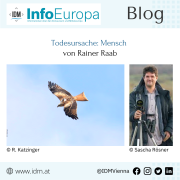
Todesursache: Mensch
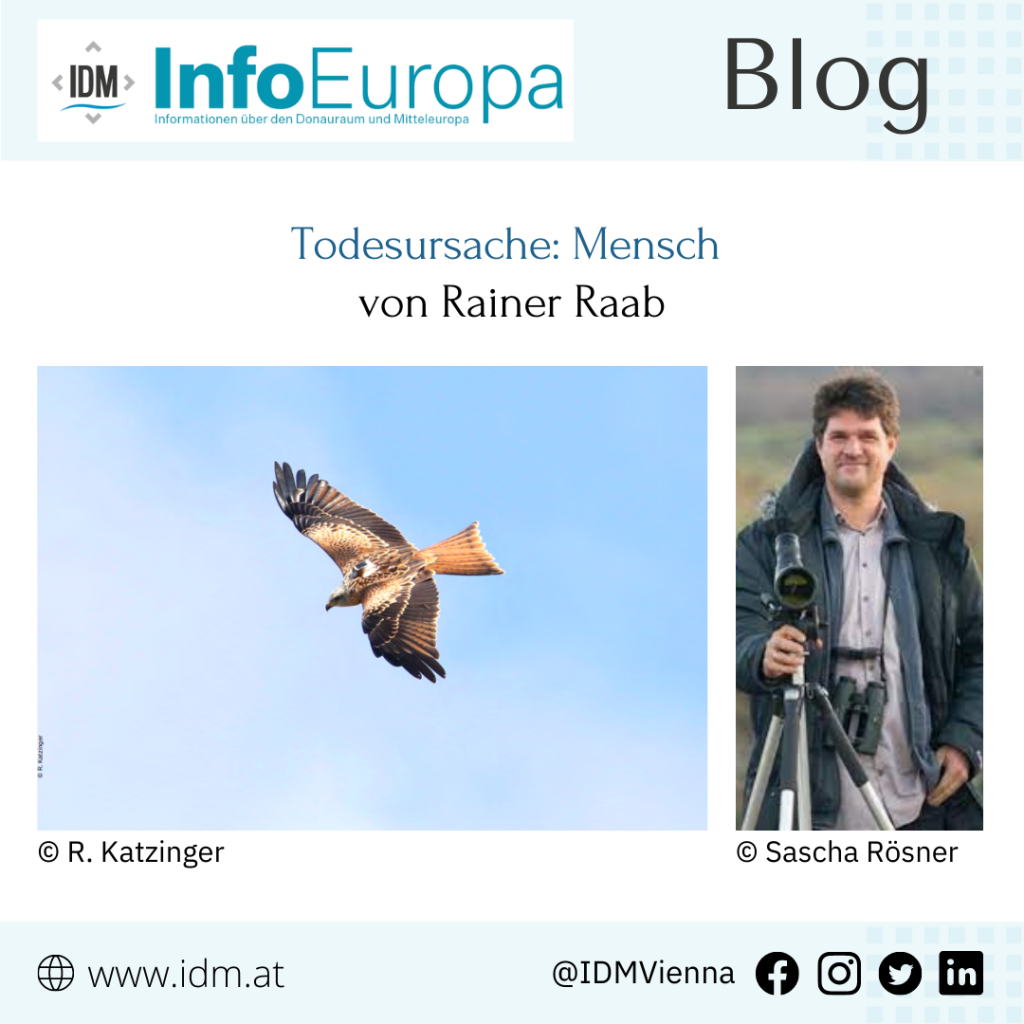
Die Donau-Auen zählen zu den wichtigsten Brutgebieten der Seeadler, Kaiseradler und Rotmilane. Illegale Vergiftungen und Abschüsse gehören zu den häufigsten Todesursachen von Greifvögeln. Auch Windparks bergen Risikos. Der Ornithologe RAINER RAAB zeigt Lösungsansätze auf.
Die Rückkehr des Seeadlers nach Mitteleuropa und nach Österreich, wo er auch die Donau als Brutgebiet nutzt, ist eine Erfolgsgeschichte des Artenschutzes. Doch gerade durch illegale Handlungen des Menschen ist der Bestand immer wieder regional gefährdet. Die Vergiftung bzw. das Auslegen von Giftködern zählt zu den Haupttodesursachen von Greifvögeln in Europa. So sterben beispielsweise beim Rotmilan nach neuesten Daten des LIFE EUROKITE Projektes europaweit mehr als 25 Prozent der Individuen durch illegale Verfolgung (Stand: 30.09.2021; bei Auswertung von mehr als 500 besenderten Rotmilanen, die bereits verstorben sind). Betrachtet man nur jene Rotmilane, die erfolgreich das Nest verlassen haben, betrifft die Wildtierkriminalität in manchen Regionen sogar deutlich mehr als die Hälfte der besenderten Vögel.
Weitreichende Schäden durch Köder
Wegen der schwerwiegenden Auswirkungen auf die Populationen, gilt die Vergiftung laut BirdLife International als eines der größten Probleme von Greifvögeln. Man unterscheidet zwischen direkter Vergiftung (Giftköder), indirekter Vergiftung und sekundärer Vergiftung. Der vorbereitete Köder wird an einer Stelle ausgelegt, die für die Zielarten und häufig für andere Nichtzielarten zugänglich ist. Das Auslegen von Giftködern ist daher eine großflächige, nicht selektive und zerstörerische Kontrollmethode, die ebenso einen enormen Einfluss auf Nichtzielarten hat. Es kann sogar ein Risiko für die menschliche Gesundheit darstellen. Illegales Vergiften kann legale alltägliche Substanzen umfassen, die jedoch auf illegale Weise verwendet werden, sowie illegale Substanzen (z.B. Carbofuran oder Aldicarb). Die häufigsten Substanzen, die in Giftködern verwendet werden, sind Insektizide und in geringerem Maße Rodentizide, üblicherweise solche, die von Anwendern als hochgiftig bezeichnet werden. In Ungarn wurde Carbofuran laut MME (BirdLife Ungarn) in 85 Prozent der 476 Vögel nachgewiesen, die zwischen 2000 und 2015 durch Köder vergiftet wurden, um Raubtiere illegal zu bekämpfen. Viele der von BirdLife International entwickelten und von der EU finanzierten Artenaktionspläne (etwa 50 Vogelarten) erkennen Vergiftungen als Bedrohung an und empfehlen in den meisten Plänen für Greifvögel (z.B. Rotmilan, Kaiseradler und Geier) gezielte Maßnahmen dagegen.
Im Einklang mit Windparks
Da der Klimawandel die Lebensbedingungen für die Arten verändert, ist ein effizienter Klimaschutz Voraussetzung für eine langfristige Erhaltung gefährdeter Arten. Das Technische Büro Raab unterstützt daher den Ausbau erneuerbarer Energie im Einklang mit der Erhaltung wertvoller Lebensräume und Arten. Um diese Ziele zu erreichen, bauen wir auf eine Zusammenarbeit zwischen Landwirtschaft, Jagd und Naturschutz sowie Energieversorgern auf. Die mittlerweile millionenfach vorliegenden Telemetriedaten von besenderten Vögeln sollten bei künftigen Windparkund Photovoltaikprojekten bei der Standortwahl unbedingt mitberücksichtigt werden. Durch die Verwendung bereits vorliegender Telemetriedaten und die Modellierung der Lebensräume der relevanten Arten aus diesen Daten, kann eine Verkürzung der Genehmigungsverfahren und Umweltverträglichkeitsprüfungen (UVP) für den Ausbau erneuerbarer Energie gelingen. Dadurch kann die Artenvielfalt entlang der Donau und der Ausbau von Windkraft sowie Photovoltaik im Umfeld der Aulandschaften miteinander im Einklang stehen.
Im Einsatz für die Rotmilane
Im Dezember 2019 wurde das Projekt »Cross-border protection of the Red Kite in Europe by reducing human-caused mortality« gestartet. Es handelt sich dabei um ein Projekt des LIFE-Programms, eines Investitionsprogramms der Europäischen Union für Klima-, Natur- und Umweltschutz. Genau wie die Donau durch zahlreiche Länder Europas fließt, steht auch im Projekt LIFE EUROKITE die internationale und grenzüberschreitende Zusammenarbeit im Vordergrund. Die Kernidee des Projekts, das seit Februar 2020 durch unser Büro umgesetzt wird, besteht darin, mithilfe von Telemetriedaten die Lebensraumnutzung der Zielarten (Rotmilan, Kaiseradler, Seeadler & Schwarzmilan) zu ermitteln. Dies ermöglicht eine Quantifizierung der Hauptgründe für die Sterblichkeit von Greifvogelarten in der EU. Ziel ist es, die wichtigsten vom Menschen verursachten Todesursachen zu vermeiden. Dazu gehören Schutzmaßnahmen gegen illegale Verfolgung (insbesondere durch Vergiftung), Kollisionen mit Straßen- und Schienenverkehr, Windparks und Stromleitungen sowie gegen Stromschlag an Mittelspannungsleitungen.
Schutz durch Tracking
Von der Mitteleuropäischen Gesellschaft zur Erhaltung der Greifvögel (MEGEG) wurden bzw. werden bis 2024 zusammen mit derzeit 18 Partnern, 14 Kofinanzierern und mehr als 20 Kooperationspartnern in ganz Europa mehr als 2.000 Rotmilane und zahlreiche andere Greifvögel (Seeadler, Kaiseradler & Schwarzmilan) in ca. 40 Projektgebieten in 12 Ländern mit GPS-Trackern ausgestattet, wodurch ihre Aktivitäten dauerhaft nachvollzogen werden können. Im Todesfall wird der Vogel von Teammitgliedern der lokalen bzw. regionalen Partner gesucht und die Todesursache wird nach Befolgung eines Mortalitätsprotokolls und wenn möglich, durch eine pathologische Untersuchung ermittelt. Während der Projektlaufzeit werden verstorbene, besenderte Rotmilane in bis zu 26 Ländern protokolliert. Auf diese Weise erhält man ein genaues Verständnis über die verschiedenen Todesursachen bei Rotmilanen und anderen Greifvögeln in ihrem jeweiligen Verbreitungsgebiet. Ein großer Vorteil dieser Methode besteht darin, dass die GPS-Verfolgung von Vögeln und die Post-Mortem-Analyse »in Echtzeit« funktionieren und sofortiges Handeln ermöglichen. Innerhalb des LIFE EUROKITE Projektes kann damit eine repräsentative Stichprobe aller Todesursachen in einem großen geografischen Gebiet unabhängig und digital transparent ermittelt werden. Das Ergebnis ist eine bessere Übersicht von gehäuften Todesfällen, wodurch innerhalb des Projektes LIFE EUROKITE Schutzmaßnahmen zielgerichtet umgesetzt werden.
Mag. Dr. Rainer Raab studierte Zoologie und Ökologie an der Universität Wien. Seit 1991 zahlreiche libellen- und vogelkundliche Arbeiten für diverse Auftraggeber – seit Februar 2001 als Technisches Büro für Biologie. Seit 2005 Umsetzung von mehreren grenzüberschreitenden LIFE-Projekten.