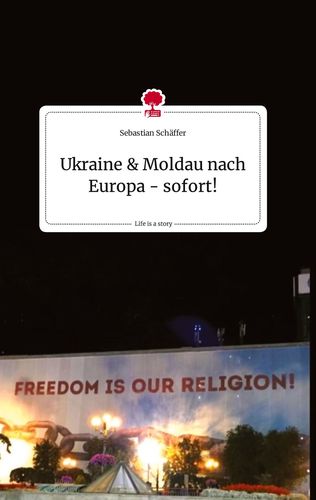
European security guarantees for Ukraine in focus — IDM voices expert analysis

In a recent appearance on AzerNews, IDM Director Sebastian Schäffer delivered a focused expert analysis on two pivotal questions concerning Ukraine’s security:  

How can the U.S. and Europe ensure Russia will not launch further aggression against Ukraine? 

Schäffer proposed a “42.7 Ukraine Compact”, utilizing Article 42.7 of the Treaty on European Union (TEU), the EU’s mutual defence clause, as the core strategic framework. Key elements include:  

  • Planned, predictable deliveries of air and missile defences.  
  • Sharing of real-time intelligence and surveillance data from allied sources.  
  • Legislative mechanisms for automatic sanctions snap-backs.  
  • A maritime and river presence to secure the Black Sea and Danube export corridor.
    Together, these measures aim to establish a credible and immediate European deterrence posture. 

What direction is the Russian war of aggression against Ukraine likely to take?  The IDM Director anticipates a pattern of intermittent escalation, with Russia probing European resolve. However, the activation of Article 42.7 and the safeguarding of Ukraine’s trade routes, especially through the Danube, could stabilise the front and strengthen Kyiv’s strategic position. Without clear guarantees, the Kremlin could shift its attention toward regions such as the Baltics or Moldova, testing Western unity.  

A core message underscores that security must be matched with justice; a ceasefire that rewards aggression risks creating just peace, not a just peace. Embedding accountability and reparations into security arrangements transforms them from temporary de-escalations into durable stability.  

The analysis was featured as part of AzerNews’s segment, “Ukraine’s Security Dilemma: Experts Debate on Western Guarantees.”  

Péter Techet für RBB24 InfoRadio über ein mögliches Putin-Selenskyj-Treffen in Budapest

Einige Medien berichteten, dass ein Treffen zwischen Wladimir Putin und Wolodymyr Selenskyj – auf Vorschlag von Donald Trump – in Budapest stattfinden könnte. Im RBB-Nachrichtensender erklärte Péter Techet, dass Orbán aufgrund seiner antiukrainischen Haltung und seiner Nähe zu Moskau in dem Konflikt keinesfalls unvoreingenommen sei und ein solches Treffen wie eine „Belohnung“ für seine antiukrainische Politik wirken würde. 

Das Interview kann hier gehört werden. 

Will European Leaders Deploy Troops to Ukraine? IDM Director Reflects on Fair Observer Insight

The latest Fair Observer article, “Will France, Germany, Poland and UK Send Troops to Ukraine to Fight Russia?”, features expert commentary by IDM Director Sebastian Schäffer, who situates the interview within his broader media engagement, including his previous appearance in FO° Talks on the Russian Roulette in Ukraine. 

Key Reflections from the Fair Observer Feature 

  • Status of troop deployment: Schäffer notes that while France and the UK remain cautiously open to deploying troops—potentially in a “reassurance” capacity rather than front-line combat—Germany and Poland have firmly ruled out such steps, citing logistical constraints and political sensitivities. 
  • Operational limitations: He underscores the considerable scale required for a meaningful force, with analysts estimating the need for tens of thousands of troops from major European actors like the UK, France, and Germany. This exceeds current deployment capacity.  
  • U.S. support dynamics: Schäffer emphasizes that while the U.S. is not offering ground troops, it is providing crucial support in areas such as air power, intelligence, surveillance, and logistics, which could facilitate any European-led troop effort.  
  • Russian response: He cautions that any foreign troop introduction risks retaliation from Moscow, potentially escalating the conflict or broadening its scope.
      

Continuity with the IDM’s Media Engagement 

This commentary builds upon Schäffer’s earlier conversation in FO° Talks on Fair Observer (June 2025), where he examined Ukraine’s integration into the EU and NATO and the implications for European security and unity. 


Sebastian Schäffer for FO° Talks on the Russian Roulette in Ukraine

IDM Director Sebastian Schäffer recently joined Atul Singh, Founder, CEO and Editor-in-Chief of Fair Observer for another episode of FO° Talks. In the interview, Schäffer shared insights from his recent visit to Ukraine and reflected on the country’s current situation. He emphasised that Ukraine’s integration into the European Union and NATO is critical for the security of the entire continent. Without stronger European unity and increased military assistance, Schäffer warned, the risk of the conflict spreading beyond Ukraine’s borders will continue to grow. While Ukraine has made remarkable progress in aligning with EU regulations, Schäffer cautioned that hesitation among member states could undermine the broader European integration project.

The discussion also covered the risk of a divided Europe, with some countries showing strong support for Ukraine and others growing weary or hesitant. Schäffer also addressed the risks of yielding to Vladimir Putin’s demands, warning that doing so could further destabilise Europe rather than bring lasting peace.

Watch the whole conversation here.

Gastkommentar in Die Presse: „Wenn Aufgeben keine Option ist“

In seinem aktuellen Gastkommentar in der österreichischen Tageszeitung Die Presse schildert IDM-Direktor Sebastian Schäffer eindrucksvoll seine jüngste Reise in die Ukraine. Der Beitrag trägt den Titel „Wenn Aufgeben keine Option ist“ und rückt Menschen in den Mittelpunkt, die trotz anhaltender Bedrohung, täglichem Luftalarm und politischer Unsicherheit nicht müde werden, für ihre Freiheit, ihre Rechte und eine europäische Zukunft zu kämpfen. 

Basierend auf zahlreichen Gesprächen mit Vertreter:innen der Zivilgesellschaft, Journalist:innen und Aktivist:innen thematisiert der Artikel nicht nur die Widerstandskraft der ukrainischen Gesellschaft, sondern auch die Rolle Europas – und insbesondere Österreichs – in einem Krieg, der längst nicht nur die Ukraine betrifft. 

Schäffer appelliert an ein langfristiges Engagement und mahnt, nicht in Gleichgültigkeit oder Kriegsroutine zu verfallen. Gerade in Zeiten wachsender Müdigkeit in der öffentlichen Debatte sei es entscheidend, Haltung zu zeigen – und hinzusehen, wo andere lieber wegschauen. 

Zum vollständigen Artikel.

Unity, Pressure, and Fragile Optimism: IDM Director on the Future of Ukraine for Asharq News

IDM Director Sebastian Schäffer recently spoke with Asharq News following a visit to Kyiv, where he assessed the current state of the war and international responses. While the conflict continues, Schäffer highlighted the resilience and determination of the Ukrainian people. At the same time, he noted the heavy toll that more than three years of full-scale war has taken on the country, including on President Zelensky, who remains committed to pursuing a diplomatic resolution. 

Schäffer pointed to recent high-level visits by European leaders – among them the German Chancellor Freidrich Merz, French President Emmanuel Macron, UK Prime Minister Keir Starmer, and Polish Prime Minister Donald Tusk – as a strong signal of unity and ongoing support for Ukraine.  

Reflecting on previous trips to Ukraine, Schäffer observed a noticeable shift in the atmosphere in Kyiv, from relative calm to heightened tension, with Russia applying increased military and psychological pressure. He described the current phase as possibly Russia’s most intense push since last fall. 

Looking ahead to the proposed meeting between President Zelensky and Valdimir Putin coming Thursday in Turkey, Schäffer warned that he doesn’t expect the Kremlin to agree to a ceasefire soon, messages from Moscow already hint towards this. The Russian war economy is not prepared for peace and neither is the regime. However, if negotiations stall, frustration among international actors – including unpredictable figures like U.S. President Donald Trump – could paradoxically lead to stronger support for Ukraine. The European partners at the very least should keep up the sanctions or even find approaches to increase the pressure as well.  

Despite the challenges, Schäffer remains cautiously optimistic. Continued international engagement, he emphasized, is essential to keeping diplomatic channels open and preventing further escalation. 

You can watch the interview (in Arabic) here 

Video message by IDM Director for event on Europe Day organized by the Educational Center of the Verkhovna Rada

During his visit in Kyiv, IDM Director Sebastian Schäffer recorded a video message for participants of a special online event for Europe Day. More than 30.000 participants from Ukraine and other European countries participated in the live broadcast organised by the Educational Center of the Verkhovna Rada. We congratulate our partners to this extraordinary achievement and look forward to continue our cooperation!

The whole event can be rewatched (in Ukrainian) on YouTube, the video message is available from minute 34:00.

IDM Director in Ukraine

For the third time since the full-scale invasion, IDM Director Sebastian Schäffer went to Ukraine. This time he went back to Kyiv, meeting with several stakeholders as per the Memorandum of Understanding with the Secretariat of the Verkhovna Rada. First, Schäffer was accompanied by Tatyana Druzhchenko to Irpin and Bucha, the sites of the horrendous crimes against humanity that have been committed by the Russian army. He also saw the progress that has been made in reconstructing the city. During a working visit to the Research Service of the Verkhovna Rada, Schäffer discussed with Lesia Vaolevska among others the continuation of the webinars supporting the European integration of Ukraine (in cooperation with the University for Continuing Education Krems). Afterwards, the IDM Director met with Liliya Gerasymenko from the Educational Centre to discuss potential cooperation as part of the Democracy Workshops of the Austrian Parliament. He also recorded a short video for Europe Day.  

Finally, Schäffer was honoured to meet with Secretary General Viacheslav Shtuchnyi in the Verkhovna Rada*. Here he had the chance to get a first-hand update on current developments and have a preview of the planned statehood centre.  

Furthermore, the IDM Director met with Tetiana Bibik and Ihor Kohut from the Ukrainian Parliamentary Institute to discuss the implications of the end of USAID for Ukraine and evaluate possibilities for cooperation to alleviate the situation.  

During his time in the Ukrainian capital, Schäffer also used the possibility to exchange with friends, finding out how recent geopolitical developments have been shaping their situations and what everyday life in a country at war looks like.  

Continuing on to Lviv, the IDM Director had meetings at the OeAD Cooperation Office with Gesandter Robert Müller and Diana Popfalushi. Schäffer also met with Sasha Dovzhyk, Director of INDEX, a new but already very active and important institution fostering documentation and exchange. Future collaborations were explored and first ideas are already under development.   

Last but not least, Schäffer held a lecture entitled “No future without Kyiv. Why European integration is decided in Ukraine” at the Faculty for International Relations of the Ivan Franko University Lviv. He emphasized Ukraine’s central role in the current geopolitical struggle and its importance for the EU’s stability, security, and unity. The event drew strong interest from students, academics, diplomats, and civil society. A lively discussion followed on Ukraine’s role in European security, EU enlargement, and future cooperation. 

The event was supported by the Ukraine Office Austria, the Austrian Cooperation Office in Lviv, and the Digital Diplomacy Laboratory. 

Sebastian Schäffer is grateful for all the interesting experiences and the hospitality during his trip despite the challenging circumstances. A special thanks to Konstantin Polishchuk and Andreas Wenninger for their support. Thank you very much and see you soon! 

*Photos from Verkhovna Rada are not available as taking them is not allowed for security reasons.

Further information:

https://austriaukraine.com/uk/impressions/lektsiya-sebastiyana-sheffera-u-lvovi-2/ 

https://research.rada.gov.ua/en/news/news_en/76176.html 

IDM Director Sebastian Schäffer visits Research Service of the Verkhovna Rada in Kyiv

On 28 April 2025, the Research Service of the Verkhovna Rada of Ukraine welcomed Sebastian Schäffer, Director of the Institute for the Danube Region and Central Europe (IDM), to Kyiv, marking a significant milestone in their collaborative efforts under the Memorandum of Cooperation signed in July 2024. 

Since the memorandum’s inception, the partnership has yielded notable initiatives, including a series of educational webinars titled “Ukraine’s Path to the EU” held between November 2024 and January 2025, which attracted over 250 participants. Additionally, representatives from the Research Service have actively participated in international conferences and IDM roundtables, fostering discussions on EU enlargement challenges and issues of local self-government amid democratic transformation. 

Looking ahead, the collaboration aims to delve deeper into topics such as European values, judicial reform, the protection of fundamental human rights, and the implementation of international criminal law through a new series of webinars planned for 2025. This ongoing partnership not only enhances the analytical capacity of the Research Service but also reinforces the educational support essential for Ukraine’s European integration journey. 

The IDM remains committed to supporting Ukraine’s path toward EU accession, emphasizing the importance of continued dialogue and cooperation in achieving shared democratic goals. 

https://research.rada.gov.ua/en/news/news_en/76176.html 


Further Information and Related Resources:

Webinars on Ukraine’s Path towards EU Accession for the Research Service of the Verkhovna Rada

Webinar „Ukraine’s Path towards EU Accession I: History of the EU enlargement“ in cooperation with the Institute for the Danube Region and Central Europe

Webinar „Ukraine’s Path towards EU Accession II: challenges of EU Enlargement“ in cooperation with the Institute for the Danube Region and Central Europe

Webinar „Ukraine’s path towards EU. Accession III: Future of EU enlargement“ in cooperation with the Institute for the Danube Region and Central Europe

IDM Director signs an open letter „Europe at a Crossroads“ in support of Ukraine

IDM Director Sebastian Schäffer has joined over 500 European  in signing the open letter “Europe at a Crossroads”. The letter calls for the deployment of 180,000 European troops to Ukraine, emphasizing the urgent need for a coordinated and robust response to Russia’s ongoing aggression.

The signatories—comprising policymakers, experts, and civil society leaders—stress that Europe must act decisively to uphold its democratic values, defend its borders, and ensure long-term peace and security on the continent.

Further details on the letter and its signatories are available here.


The letter has been published in further languages:

in French by Revue Esprit. Ukraine : l’Europe à l’heure des choix

https://esprit.presse.fr/actualites/esprit/ukraine-l-europe-a-l-heure-des-choix-45950

in Italian by Linkiesta. Ultima chiamata. L’appello per una presenza stabile ai confini orientali dell’Ucraina

https://www.linkiesta.it/2025/04/appello-europa-truppe-ucraina-putin-confini-guerra/

in Bulgarian by Икономически Живот. Стотици видни общественици поискаха Европа да изпрати 180 хил. военни в Украйна 

https://ikj.bg/novini/stotitsi-vidni-obshtestvenitsi-poiskaha-evropa-da-izprati-180-hil-voenni-v-ukryna/

in Norwegian by Geopolitika. Ukraina: Europa står overfor et valg. Appell til Europas stats- og regjeringssjefer 

https://geopolitika.no/ukraina-appell-til-europas-stats-og-regjeringssjefer/

in Spanish by Letras Libres. Ucrania: Europa en el momento de las decisiones 

https://letraslibres.com/politica/ucrania-europa-en-el-momento-de-las-decisiones/08/05/2025/

in Russian, on the Moscow Times Telegram channel.

Despite various attempts, the appeal has not been published in German and Polish. You can find the text in these languages as well as in Ukrainian at www.leuropeen.eu